
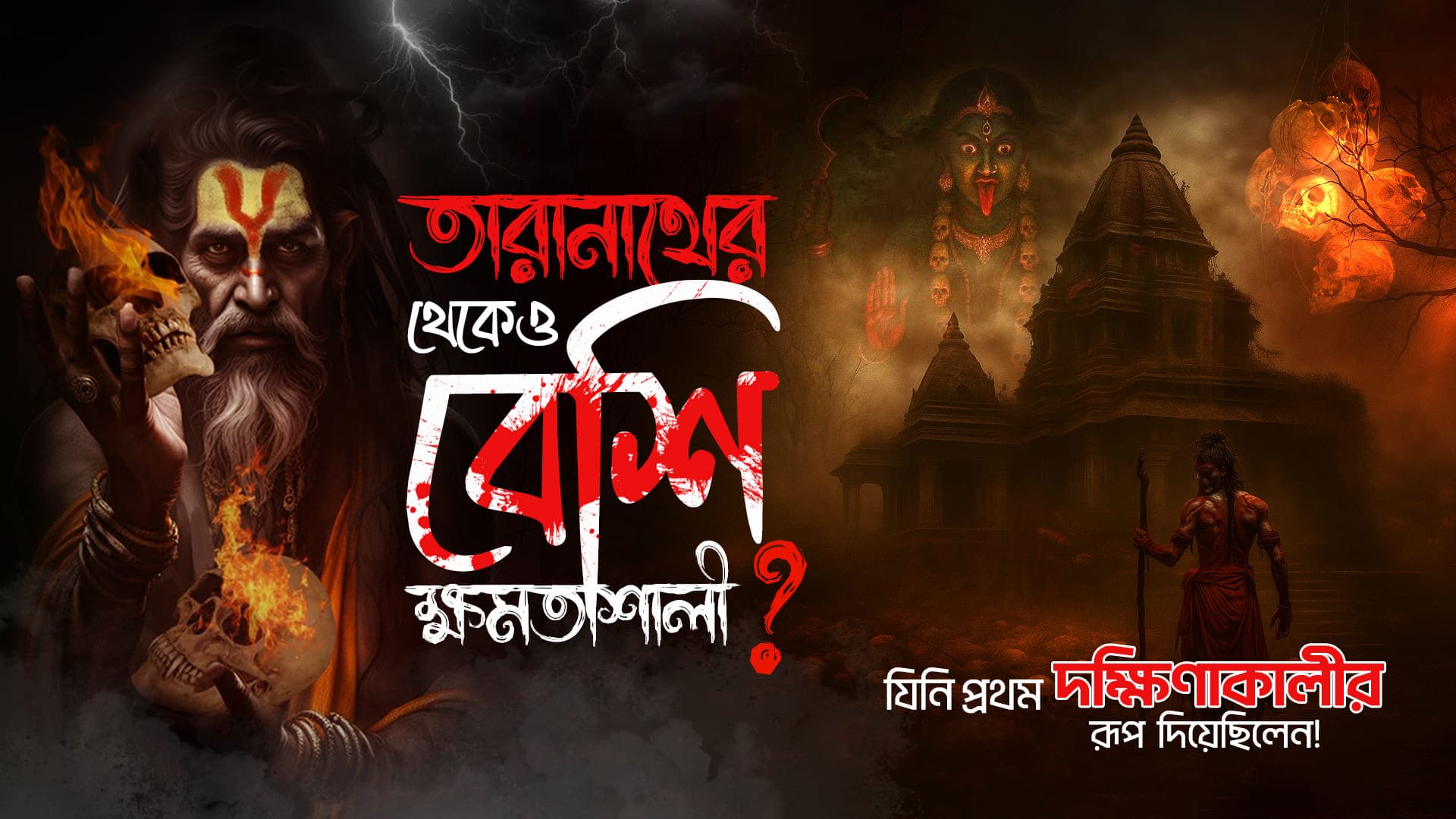
Since time immemorial, Goddess Kali was worshiped with aggressive rituals in Bengal, which have now transformed and become an object of pity and a household affair in the heart of Bengal, where the Ganges whispers tales of ancient times. One such key figure had been the 17th-century Tantric scholar Krishnananda Agambagish from Nabadwip, whose vision and devotion gave rise to the idol Dakshinakali, a form of the goddess bereft of blood and gore, full of elegance and possession of maternal love.
Who was Krishnananda Agambagish?
Krishnananda Agambagish was born in 1533 in Nabadwip, in the Nadia district. He was a great Bengali pandit and Tantric mistress. He wrote Brihat Tantrasara, which was a digest that synthesized many Tantric traditions: Shaiva, Shakta, Vaishnava, and Ganapatya. He is viewed as an inclusiveRather, he emphasized the essentials of Tantra, rather than ritualistic practice.
However, Agambagish’s influence was not restricted to scholarly works; he was very instrumental in promoting Kali Puja in Bengal. In fact, before his own interventions, Kali worship was considered esoteric and confined to the advanced Tantric practitioner. Through his guidance, the worship of Kali became available to the common people so that one’s spirituality might be deepened.
The Divine Inspiration for Dakshinakali
The manufacturing of the idol of Dakshinakali originated from the divine dream of Agambagish. As per the folk myth, on one night with a heavy spell of meditation, Goddess Kali appeared before him in his dream. Goddess Kali instructed him to mold her idol based on the first woman he encountered in the morning.
At dawn, Agambagish went out and saw one village woman doing her daily work. She was standing with one leg forward, smearing cow dung on the wall; then she saw him and discreetly saliva flowed from her tongue. The simple, yet deep action overwhelmed Agambagish, and he saw in her the manifestation of the Goddess.
From this one vision, Agambagish molded the form of Dakshinakali from clay. He visualized a Goddess, benign and enchanting, more a mother-not one with fierce wide eyes cringing with cruelty, nor strewing dread, but one enchanting and benign. Such a face of Kali, with unprecedented mythology, won mass appeal and became an integral part of Bengali family life on Kali Puja.
Dakshinakali: Symbolism and Significance
First, the Dakshinakali form is peculiarly symbolic. Unlike the eternal Kali, who stands with her left foot on the chest of Shiva, Dakshinakali is shown to proceed with a right forward leg, hence reflecting auspiciousness and bestowing mercies. In addition, her postures and expressions are those of protection and maternal care to make her more close to devotees.
The use of Kali herein projects the thinking of Agambagish to present the divine to be less imposing and more accessible. By underlining the nurturing aspects of the Goddess, he bridges the gap between esoteric Tantric practices and the spiritual needs of the common people.
Legacy and Cultural Impact
But Krishnananda Agambagish’s service is not limited to constructing the idol Dakshinakali. His all-encompassing attitude toward Tantra and his love for the Goddess make their stamp on Bengali spiritual life. The Agomeshwari Kali Puja initiated by him is still continuing in Nabadwip and is held in high respect and regard with devotion.
Further, Agambagish’s teachings have inspired generations of devotees and scholars. His emphasis on love, compassion, and devotion in spiritual practices appeals to many, offering at the same time both a deep and available path.
The Function of Tantra in Bengali Culture
Bengali culture has a very confusing and age-old affair with Tantra. For ages, Tantra has been related to mysterious rituals and mystical practices for spiritual empowerment. As scholars and historians argue, Nabadwip and Tarapith are two of the most prominent centers of learning and practicing Tantra.
The root of Kali Puja in Bengal goes deep into Tantric philosophy. Even in Kali Puja 2025, the festival bears immense spiritual significance in continuation, reflecting how the Tantric traditions were slowly getting adapted for household worship. Tantric texts like Tantrasar instructed on rituals and therefore shone light on the ethical and spiritual dimensions of Tantra, making Tantra both a scholarly and devotional path that shaped the celebration of Kali Puja across Bengal.
Clay Idol Making: The Art Behind Dakshinakali
In that respect, one of the amazing things about Dakshinakali is her clay idol creation. Unlike stone and metal idols, with clay, the sculptor can mold expressions and posture to precision, bringing the Goddess alive. Krishnananda Agambagish did things a bit differently from other idol-makers of his time; he incorporated emotion and human appeal into his idols. Rituals, chanting, and meditation were often parts of the sculpting process, hence a symphony of art, devotion, and Tantra.
Krishnananda’s Writings and Philosophical Insights
Apart from rituals, Krishnananda Agambagish was a philosopher and writer. Two of his major works are Brihat Tantrasara and Tattwabodhini, explaining the philosophical sampling that Tantra is based upon. He emphasized a balance between devotion and knowledge, integrating the Shaiva, Shakta, Vaishnava, and Ganapatya traditions in the creation of an environment within which practitioners could go about Tantra responsibly without fear or superstition.
Household Worship and Accessibility
Until the influence of Krishnananda, Kali Puja was pretty much confined to advanced tantriks. Under his guidance, worshiping Dakshinakali reached common households, making it possible for families to participate in Kali Puja 2025 and other annual celebrations. Now, a family can perform simple Kali Puja at home, retain personal spirituality, and remain within the bounds of ethics and safety. This marked a democratization of spiritual practice, bringing a significant cultural shift in Bengal.
Myths, Legends, and Popular Narratives
Over a long period, hundreds and thousands of myths and rumors gradually flourished around Krishnananda Agambagish and Dakshinakali. Tales such as “Agambagishi Kando” reflect both horror and respect for his spiritual powers. Scholars think that these legends, though dramatic, had their purpose: they inculcated respect for religious rites and perspectives and taught the grave perspective on devotion. Even now, these stories continue to inspire folk tales, dramas, and devotional songs of Bengal.
The story of Dakshinakali’s origin epitomizes the transforming power of divine inspiration coupled with human devotion. From a fearful deity, Kali emerged, through Krishnananda Agambagish’s vision, as a compassionate mother figure, enshrining the qualities that allure generations of devotees. His legacy keeps inspiring and guiding those who seek a deeper connection with the divine.
Kali Puja is never complete without tales of mystery, tantra, and divine power. Meet the legendary tantric Krishnananda Agamabagish, the visionary behind the form of Dakshinakali, a story more powerful and chilling than Taranath himself. Dive into this untold legend and explore the mystic world of Kali.
Watch the full story on Optage Media’s YouTube channel and subscribe for more unseen tales.
Watch this on YouTube: 👉 https://youtu.be/qm2oqcyJ5Us?si=TRBJDmJq0-evM8cx
